By RestWell Team, RN, Certified Pediatric Sleep Consultant
It’s 10 PM. The house is quiet, but you’re wide awake, scrolling through your phone after finally getting the kids to bed. You know you should be sleeping, but this is your only time to unwind. As you scroll, a headline catches your eye: "Is Your Child
Screen Time and Sleep: What Every Parent Needs to Know
It’s 10 PM. The house is quiet, but you’re wide awake, scrolling through your phone after finally getting the kids to bed. You know you should be sleeping, but this is your only time to unwind. As you scroll, a headline catches your eye: “Is Your Child’s iPad Ruining Their Sleep?” A wave of guilt washes over you. You’ve wondered about this yourself. Your five-year-old has been fighting bedtime for weeks, and your toddler seems to be waking up more at night. Could the very device you use to buy a few minutes of peace be the cause of your family’s exhaustion?
If this sounds familiar, you are not alone. In our hyper-connected world, screens are everywhere. They are powerful tools for learning, connection, and entertainment, but they are also a source of immense anxiety for modern parents. We are constantly navigating a digital landscape that didn’t exist when we were children, and it often feels like we’re making up the rules as we go. The guilt can be heavy—am I letting them have too much? Is it the right kind of content? Am I a bad parent for using a tablet to cook dinner in peace?
Here at RestWell, we want you to release that guilt. Our goal is not to shame you about screen time, but to empower you with knowledge. As a pediatric sleep expert and a mother, I understand the real-world challenges you face. This article will break down the science behind how screen time affects your child’s sleep, provide you with age-appropriate guidelines, and offer practical, actionable steps you can take to foster healthy sleep habits in your digital-age family. Let’s work together to turn those stressful nights into restful mornings.
The Unseen Thief: How Screens Disrupt Your Child's Natural Sleep Rhythms
To understand why that evening cartoon or late-night video game can wreak havoc on your child’s sleep, we need to look at the powerful biological processes at play. It’s not just about the time spent on screens; it’s about how the light and content from these devices interact with your child’s developing brain and body.
The Melatonin Sabotage: Blue Light’s Hidden Impact
The primary culprit in the screen time-sleep battle is blue light. All screens—phones, tablets, computers, and televisions—emit a high concentration of this short-wavelength light. Our brains have a special sensitivity to blue light because it mimics the brightness of the morning sun. When our eyes are exposed to it, our internal body clock, or circadian rhythm, gets a powerful signal: “It’s daytime! Be awake and alert!”
This signal directly interferes with the production of a crucial sleep hormone called melatonin. Often called the “hormone of darkness,” melatonin is what tells your body it’s time to wind down and prepare for sleep. Under normal conditions, the pineal gland in the brain begins releasing melatonin a few hours before bedtime as darkness falls. However, when a child is looking at a screen in the evening, the blue light tricks their brain into thinking it’s still daytime, effectively hitting the pause button on melatonin production. Research has shown that even a short amount of screen time can delay the melatonin surge by several hours, making it significantly harder for a child to fall asleep at their natural bedtime [1].
A Brain on Overdrive: The Problem with “Winding Down” with a Screen
Many parents hope that a quiet show or a simple game will help their child relax before bed. Unfortunately, most screen-based activities have the opposite effect. Interactive content, such as video games, educational apps, or social media, requires active engagement from the brain. This cognitive stimulation keeps a child’s mind buzzing and alert, rather than shifting into a calm, pre-sleep state. Think of it as the difference between listening to a gentle lullaby and trying to solve a puzzle—one is calming, the other is activating.
Furthermore, the emotional content of what a child is watching matters. Fast-paced cartoons, dramatic shows, or even exciting educational content can trigger the release of stress hormones like cortisol and adrenaline. This creates a state of emotional and physiological arousal that is the very antithesis of what’s needed for restful sleep. The brain becomes too wired and anxious to transition peacefully into slumber, leading to bedtime battles, delayed sleep onset, and a child who is “tired but wired.”
The Sleep Displacement Effect: A Simple Math Problem
Beyond the biological and psychological effects, there is a more straightforward issue at play: sleep displacement. Every minute a child spends on a screen is a minute they are not spending on other activities, including sleep. When screen time is allowed to creep into the hour or two before bed, it often pushes bedtime later and later. A 2019 study published in Sleep Medicine Reviews found a consistent correlation across numerous studies: more screen time is directly associated with later bedtimes and shorter overall sleep duration [2].
This is a simple but critical concept. Children have non-negotiable sleep needs for healthy development. When screen time eats into that protected sleep window, the debt adds up quickly, leading to an overtired child who is more prone to meltdowns, has difficulty concentrating, and, ironically, has an even harder time falling asleep the next night.
One Size Doesn’t Fit All: Age-Specific Screen Time Guidelines
Navigating screen time isn’t just about how much, but also about what and when. A teenager’s media consumption is vastly different from a toddler’s, and the rules need to adapt accordingly. The American Academy of Pediatrics (AAP) provides evidence-based recommendations that can serve as a foundational guide for parents [3].
Infants and Toddlers (0-2 Years): The Primacy of Human Connection
For the youngest children, the AAP recommendation is starkly simple: avoid digital media for children younger than 18 to 24 months, other than video-chatting with family. This isn’t an arbitrary rule; it’s rooted in the fundamental needs of early brain development. During these critical first two years, a baby’s brain is growing at an explosive rate, and this growth is fueled by human interaction. They learn by observing faces, hearing language, and engaging in reciprocal, “serve and return” interactions with their caregivers. A screen, no matter how “educational,” is a passive and poor substitute for this rich, real-world experience.
Preschoolers (3-5 Years): The Co-Viewing and Content Era
As children enter the preschool years, screens can be introduced in a limited and intentional way. The AAP recommends limiting screen use to no more than 1 hour per day of high-quality programming. This is the age of co-viewing. Instead of using a screen as a digital babysitter, parents should, as much as possible, watch with their children. This allows you to help them understand what they’re seeing, apply the lessons to the world around them, and monitor their reactions. The focus should be on content that is slow-paced, pro-social, and educational. A slow-moving nature documentary is a world away from a chaotic, fast-edited cartoon.
School-Aged Children (6-12 Years): Balancing Act and Bedroom Boundaries
Once children enter school, screen time often becomes a necessity for homework and projects. The key here is to create a clear distinction between recreational and educational screen time and to ensure that digital media does not displace the essentials: a good night’s sleep, at least one hour of physical activity per day, and quality family time. This is the age to establish one of the most important rules for sleep hygiene: no screens in the bedroom. A bedroom should be a sanctuary for sleep. When a child has a TV, tablet, or phone in their room, the temptation to use it after lights-out is often too great to resist.
Teenagers (13-18 Years): Navigating the Social Maze
The teenage years bring a new set of challenges. Social connection is paramount, and much of it happens online. The fear of missing out (FOMO) is a powerful driver, often compelling teens to stay connected late into the night. Research has consistently linked heavy social media use with poor sleep, increased anxiety, and depression [4]. For this age group, the conversation needs to shift from parental control to teaching self-regulation. Work collaboratively with your teen to set boundaries, emphasize the importance of sleep for their mental and physical health, and encourage them to be mindful of how their media use makes them feel.
Screen Time and Sleep: A Quick-Reference Guide
To make this easier to visualize, here is a table summarizing the key recommendations and risks by age group.
| Age Group | Recommended Sleep (per 24 hrs) | AAP Screen Time Guideline | Key Risks of Excessive Screen Time on Sleep |
|---|---|---|---|
| Infants (4-12 mos) | 12-16 hours (including naps) | None (except video chat) | Disrupted development, delayed language acquisition, attention problems. |
| Toddlers (1-2 yrs) | 11-14 hours (including naps) | Limit to 1 hour/day of high-quality programming for 18-24 mos | Language delays, impaired executive function, increased tantrums from overstimulation. |
| Preschoolers (3-5 yrs) | 10-13 hours (including naps) | No more than 1 hour/day of high-quality programming | Suppressed melatonin, delayed sleep onset, nightmares [blocked] from scary content. |
| School-Aged (6-12 yrs) | 9-12 hours | Place consistent limits; ensure it doesn’t displace sleep/exercise | Later bedtimes, shorter sleep duration, difficulty waking, poor academic performance. |
| Teenagers (13-18 yrs) | 8-10 hours | Place consistent limits; teach self-regulation | Anxiety/depression from social media, severe circadian rhythm disruption. |
What the Research Says: The Scientific Consensus
This isn’t just parental intuition; a robust body of scientific evidence confirms the detrimental link between screen time and children’s sleep. Researchers across the globe have studied this issue extensively, and the findings are remarkably consistent. Here’s a look at what the experts have found.
The Presence of a Media Device in the Bedroom is a Key Culprit: A landmark meta-analysis led by Dr. Monique LeBourgeois, published in Pediatrics, examined data from dozens of studies. The conclusion was unequivocal: the mere presence of a media device in a child’s bedroom is associated with less sleep, later bedtimes, and increased daytime tiredness. This held true regardless of whether the child actually used the device on any given night, suggesting the temptation or potential for use is enough to disrupt sleep patterns [5].
Blue Light Directly Suppresses Melatonin: While we’ve discussed the mechanism, studies have quantified the effect. Research from Dr. Judith Owens, a leading authority on pediatric sleep, has highlighted that the developing eyes of children are more susceptible to the effects of blue light than those of adults. Their pupils are larger and their lenses are more transparent, allowing more of this stimulating light to penetrate the retina and send a stronger “wake up” signal to the brain. This makes the pre-bedtime use of screens particularly disruptive for younger children [2].
Interactive Media is More Harmful than Passive Viewing: Dr. Avi Sadeh, a researcher known for his work using actigraphy to measure sleep, has contributed to findings that differentiate between types of screen time. His research supports the idea that interactive media—like video games or social networking—is more detrimental to sleep than passive television viewing. The cognitive and emotional engagement required for these activities leads to a longer “wind-down” time, a state known as increased sleep onset latency, meaning it takes the child significantly longer to fall asleep after the lights are turned off [6].
Sleep Displacement is a Major Factor: Dr. Helen Hiscock and her team in Australia have conducted extensive research on behavioral interventions for pediatric sleep problems. Their work reinforces the concept of sleep displacement. They found that for every hour of screen time a child engages in, there is a corresponding decrease in sleep duration. This simple trade-off has profound implications for a child’s mood, behavior, and ability to learn the following day [7].
The Content Matters: Dr. Michelle Garrison at the Seattle Children’s Research Institute has focused on the content of media. Her research shows that violent or fast-paced content, even in cartoons, can lead to increased anxiety and nightmares in young children, further disrupting sleep. Conversely, slow-paced, pro-social content did not have the same negative impact, underscoring the importance of parents curating their children’s media diet, not just limiting the time [8].
Collectively, the message from the scientific community is clear: evening screen time, bedroom screen access, and stimulating content are significant risk factors for poor sleep in children and adolescents. The good news is that these are all modifiable factors that parents can address.
Try This Tonight: 6 Steps to Reclaim Your Family’s Sleep
Knowing the science is one thing; putting it into practice in a busy, modern family is another. The key is to start small and be consistent. Here are six practical, actionable steps you can implement right away to create a healthier sleep environment.
-
Declare a “Digital Curfew.” This is the single most effective change you can make. Designate a time—at least 60-90 minutes before bedtime—when all screens are turned off for the night. This allows the brain a crucial “cool-down” period and gives melatonin a chance to rise naturally. The curfew applies to everyone in the family to model healthy habits and create a sense of fairness.
-
Create a Screen-Free Sanctuary. Your child’s bedroom should be for sleeping, not for entertainment. Remove all screens from the bedroom, including TVs, tablets, and old smartphones. This eliminates the temptation for late-night use and reinforces the psychological association between the bedroom and restful sleep. Charge all devices in a central location, like the kitchen, overnight.
-
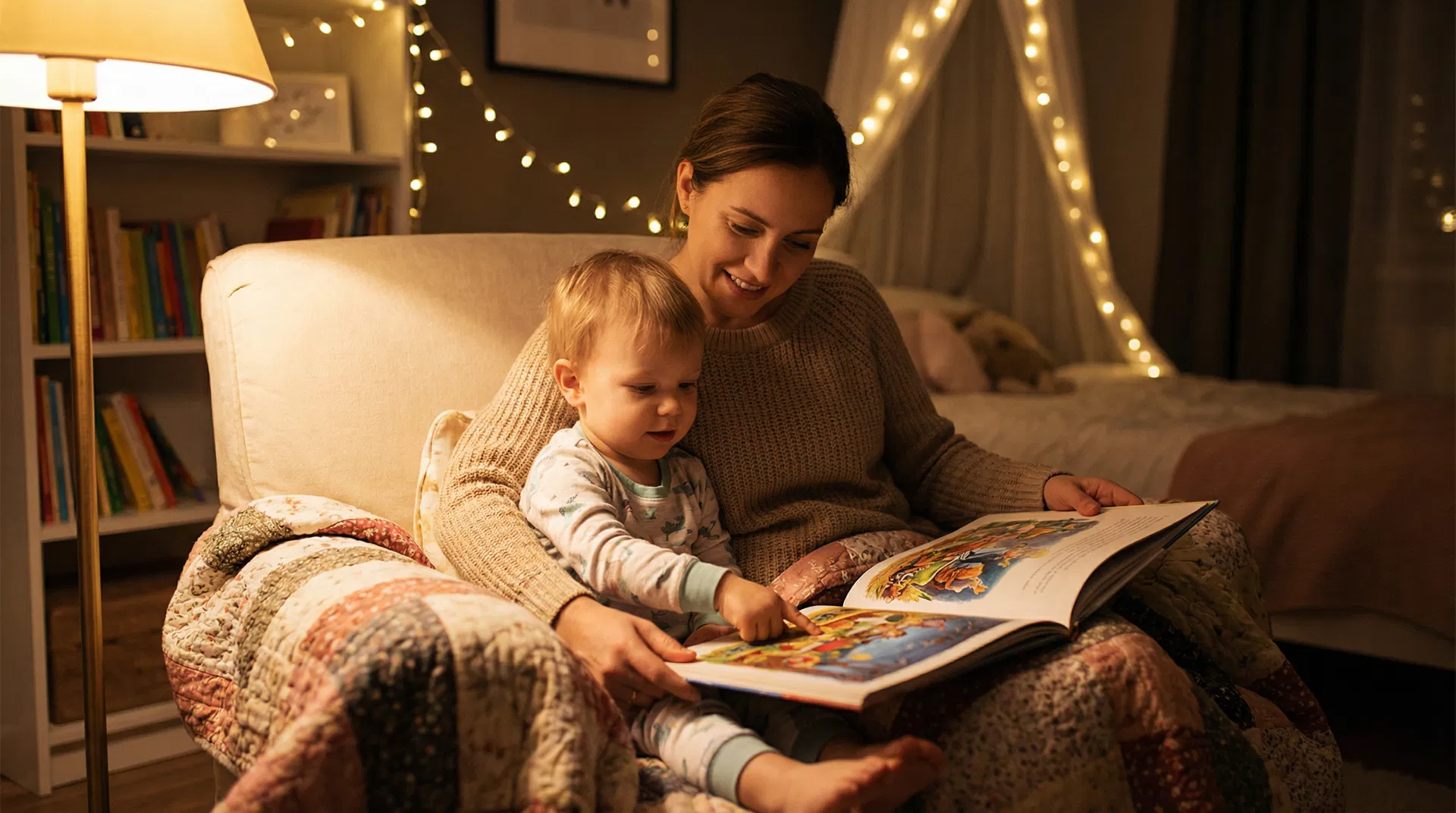
Power Up the Bedtime Routine [blocked]. A predictable and calming bedtime routine [blocked] is a powerful cue for your child’s brain that sleep is coming. Replace the 30-60 minutes that used to be screen time with soothing activities. This could include a warm bath, reading books together (with a dim, warm light), listening to calm music or a podcast, or simply talking about the day. The consistency of the routine is more important than the specific activities.
-
Develop a Family Media Plan. Instead of a constant battle of wills, sit down as a family and create a clear, written media plan. This plan, a concept championed by the AAP, outlines the rules for screen use, including daily time limits, screen-free times (like during meals), and screen-free zones (like bedrooms). When children are involved in creating the rules, they are more likely to buy into them.
-
Front-Load Your Child’s Screen Time. If your child has a daily screen time allowance, encourage them to use it earlier in the day. Screen time right after school is far less likely to interfere with sleep than screen time right before bed. This helps them get their digital fix without paying the price at night.
-
Be a Role Model, Not a Ruler. Our children are watching us. If we are glued to our phones late at night, it sends a powerful message that this is normal and acceptable behavior. When you model putting your own phone away during the digital curfew, you are teaching them a critical lesson about digital wellness and self-regulation. Your actions will always speak louder than your words.
Common Questions Parents Ask
Navigating this topic brings up many practical questions. Here are some of the most common ones we hear from parents at RestWell.
1. What about “educational” apps and games? Are they okay before bed?
While the content may be educational, the format is still stimulating. Even educational games require active mental engagement, and the blue light from the screen still suppresses melatonin. It’s best to treat all screen time the same in the hour before bed and opt for non-digital educational activities, like reading a book, instead.
2. My child needs a computer for homework. How do we manage that?
This is a common challenge for school-aged children. Try to have your child complete their homework as early as possible in the evening. If they must work late, have them use a program that filters out blue light (like f.lux on a computer or Night Shift on an iPhone) and make sure the brightness is turned down. Encourage them to take frequent breaks to rest their eyes and brain. The moment homework is done, the digital curfew should begin.
3. Is it bad for my child to fall asleep to a show or music on a device?
This is what sleep experts call a “sleep onset association.” If a child becomes dependent on a screen to fall asleep, they may not be able to fall back asleep on their own when they naturally wake up in the middle of the night. They will need the screen to be turned back on to get back to sleep, leading to fragmented, poor-quality rest. The goal is to teach your child to fall asleep independently, without relying on any external crutch, especially a screen.
4. How do I get my teenager to buy into a digital curfew? They say they need to talk to their friends.
With teens, it’s a negotiation, not a decree. Acknowledge their need for social connection and work with them to find a compromise. Frame the conversation around their own goals—better performance in sports, clearer skin, improved mood. Explain the science of how sleep impacts these things. You might agree on a 30-minute “last call” for texting friends before the phone is put away for the night. The key is to show them respect while still holding a firm boundary for health and well-being.
A Brighter, More Rested Future
Parenting in the digital age is a marathon, not a sprint. There will be days when you rely on screens more than you’d like, and that’s okay. The goal is not perfection, but progress. By understanding the science, setting clear boundaries, and prioritizing sleep, you can protect your child’s physical and mental health and guide them toward a balanced relationship with technology.
Remember, you are the expert on your child. Trust your instincts. If you feel that screen time is negatively impacting your family’s well-being, you have the power to make a change. Start tonight. The journey to more restful mornings begins with a single, intentional step.
Feeling overwhelmed and need a personalized plan? The team at RestWell is here to help. We work with families one-on-one to create customized sleep plans that address your unique challenges and goals. If you’re ready for dedicated support on your journey to better sleep, visit us at RestWell to learn more.
References
[1] American Academy of Pediatrics. (2016). Media and Young Minds. Pediatrics, 138(5), e20162591.
[2] Hale, L., & Kirschen, G. (2020). Screen time and sleep in children and adolescents. Sleep Health, 6(5), 569-570.
[3] Reid Chassiakos, Y. L., Radesky, J., Christakis, D., Moreno, M. A., & Cross, C. (2016). Children and adolescents and digital media. Pediatrics, 138(5), e20162593.
[4] Twenge, J. M., Krizan, Z., & Hisler, G. (2017). Decreases in self-reported sleep duration among US adolescents 2009–2015 and association with new media screen time. Sleep medicine, 39, 47-53.
[5] Carter, B., Rees, P., Hale, L., Bhattacharjee, D., & Paradkar, M. S. (2016). Association between portable screen-based media device access or use and sleep outcomes: a systematic review and meta-analysis. JAMA pediatrics, 170(12), 1202-1208.
[6] Sadeh, A., & Tikotzky, L. (2012). Infant sleep and sleep-wake regulation. In Handbook of infant development (pp. 281-311). Wiley.
[7] Hiscock, H., & Davey, M. J. (2018). Managing paediatric sleep problems. Australian prescriber, 41(1), 14.
[8] Garrison, M. M., & Christakis, D. A. (2012). The impact of a healthy media use intervention on sleep in preschool children. Pediatrics, 130(3), 492-499.
RestWell Resources: bedtime routine guide [blocked]
Related Articles
Explore more evidence-based sleep guidance from RestWell:
- Establishing a Bedtime Routine That Works [blocked]
- The Ideal Bedtime Routine: What Research Says Actually Works [blocked]
- Toddler Sleep Challenges and Solutions [blocked]
- Building the Perfect Bedtime Routine: A Step-by-Step Guide by Age [blocked]
- Night Terrors vs. Nightmares: How to Tell the Difference and What to Do [blocked]
References & Further Reading
- Pickard, H. et al., "Toddler Screen Use Before Bed and Its Effect on Sleep," JAMA Pediatrics, 2024. Read more
- Hale, L. & Guan, S., "Screen time and sleep among school-aged children and adolescents: a systematic literature review," Sleep Medicine Reviews, 2015. Read more
- National Sleep Foundation, "Effects of Screen Use on Children's Sleep," 2024. Read more